Source portable wireless camera finder for Hotels Bedrooms Dormitories
Compare 30 portable wireless camera finder models from Guangdong suppliers. Buyers can evaluate detection ranges, battery life, and signal filtering features for security in hotels, bedrooms, and dormitories.
Key considerations
Products List


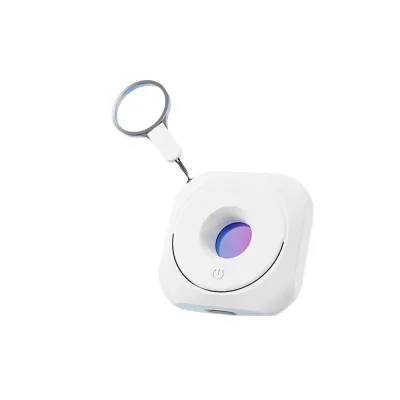


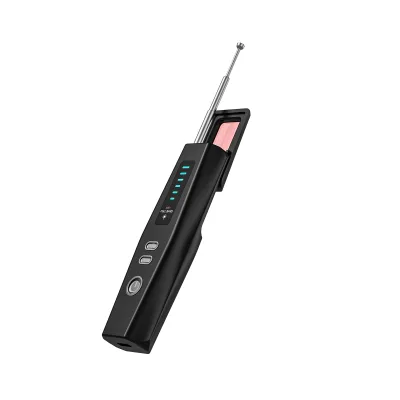


Comprehensive Sourcing Guide
Strategic Sourcing Guide for Portable Wireless Camera Finders
The market for portable wireless camera finders has expanded significantly as privacy concerns in hospitality, corporate, and personal spaces have intensified. For B2B procurement professionals, sourcing these devices requires a nuanced understanding of technical capabilities, supply chain logistics, and the specific operational environments where these tools are deployed. This guide provides a disciplined framework for evaluating suppliers and products, grounded in observable product attributes and verified market data. The primary objective is to equip buyers with the knowledge to select devices that offer genuine detection capabilities without falling prey to exaggerated marketing claims.
Technical Architecture and Detection Capabilities
Understanding the underlying technology is the first step in any procurement decision. Portable wireless camera finders generally operate on two primary detection principles: radio frequency (RF) analysis and optical lens detection. The supplied product data indicates a clear divergence in these technologies among available models. Some devices, such as those identified by model numbers like T12 and T1, are explicitly designed as signal detectors. These units typically scan for electromagnetic emissions from wireless transmission devices, covering networks such as WiFi, Bluetooth, and GSM. The technical specification for the "Versatile RF Signal Detector Vs-Nrf" highlights a detecting frequency range of 50 MHz to 6.0 GHz, a critical parameter for identifying modern transmission protocols.
Conversely, other products in the market, such as the "Handheld Detector" with model number VS-127, utilize optical methods. These devices often feature infrared light with a wavelength of 620-625 nm to detect the reflection from camera lenses. The data notes a specific detection distance of approximately 3 to 4 meters for WiFi IP cameras and up to 70 meters for wireless video cameras, though these ranges are highly dependent on environmental conditions and the power output of the target device. Buyers must verify if a specific unit combines both RF and optical detection or if they are purchasing separate tools for different scenarios. The "Signal Detector Finder Bug Detector" example lists a detection range of 0-5 meters with a special filter, suggesting a specialized application for close-range scanning.
The physical form factor is also a technical consideration. Dimensions vary significantly, with some models measuring 1406030mm while others are more compact, such as the unit weighing only 25g. Battery capacity is another critical technical spec; observed values range from 300mAh to 500mAh, directly influencing the standby time, which is listed as 10 hours for certain models. The charging method has standardized toward Type-C ports, ensuring compatibility with modern power sources. Procurement teams should prioritize devices that offer a balance between detection range, battery life, and physical portability, ensuring the tool can be carried easily in a pocket or bag for spontaneous use in hotel rooms or conference centers.
Compliance, Certification, and Regulatory Verification
When sourcing electronic detection equipment, compliance with international standards is non-negotiable, yet specific certification statuses for individual SKUs are often not explicitly listed in general product catalogs. Buyers must treat the absence of a visible certification mark as a requirement for verification rather than a default status. The devices operate within specific frequency bands (50 MHz - 6.0 GHz), which are regulated in many jurisdictions. In the European Union, for instance, devices emitting radio frequencies must comply with the Radio Equipment Directive (RED), while in North America, FCC certification is mandatory for devices that emit RF energy.
The supplied data mentions the origin of products as Guangdong, China, a major manufacturing hub. While this region is known for high-volume electronics production, it also hosts a mix of compliant and non-compliant manufacturers. Buyers should explicitly request proof of compliance for the specific model number they intend to purchase. This includes verifying that the device does not emit interference that violates local spectrum regulations. Furthermore, since these devices are often used in sensitive environments like conference centers or hotels, the equipment itself must not introduce security vulnerabilities.
Buyers should also consider the "Product Name" and "Feature" descriptions carefully. Terms like "Anti-Candid Anti-Tracking Anti-Eavesdropping" describe the intended function but do not constitute a regulatory certification. The "Feature 02: Dedicated 2.4G WiFi IP Camera Detection" suggests a specific tuning capability, but this does not replace the need for general electromagnetic compatibility (EMC) testing. Procurement contracts should include clauses requiring the supplier to provide valid test reports from accredited laboratories, confirming that the device meets the safety and emission standards of the destination market. Without these documents, the risk of customs seizure or legal liability increases significantly.
Cost Drivers and Pricing Dynamics
The pricing landscape for portable wireless camera finders is highly variable, with observed listed prices ranging from $0.90 to $25,000. This wide spectrum indicates that price is not a reliable indicator of quality or capability on its own. The lower end of the range likely corresponds to basic optical detectors or simple RF scanners with limited frequency coverage and shorter battery life. The upper end may reflect industrial-grade units with advanced digital signal amplifier technology, broader frequency ranges, or specialized features like headphone mute detection.
Several factors drive the cost of these devices. First, the complexity of the detection algorithm and the quality of the sensors play a major role. A device utilizing "Digital Signal Amplifier Technology" to enhance weak signals will inherently cost more than a basic indicator light model. Second, the build quality and materials, such as the "Plastic" casing noted in the data, affect durability and price. Third, the battery capacity and charging efficiency are cost drivers; a 500mAh battery with fast charging capabilities adds to the unit cost compared to a smaller, slower-charging alternative.
The Minimum Order Quantity (MOQ) is another critical cost factor. The observed MOQ range is between 1 and 20 units. For small businesses or pilot programs, an MOQ of 1 allows for low-risk testing, while larger enterprises may negotiate better unit pricing with an MOQ of 20. Buyers should be wary of extremely low prices, as they may indicate counterfeit components or substandard detection ranges that do not meet the advertised specifications. The "Single Gross Weight" and "Single Package Size" also influence logistics costs; heavier or bulkier items will incur higher shipping fees, which should be factored into the total cost of ownership.
Typical Applications and Usage Scenarios
The versatility of portable wireless camera finders makes them suitable for a wide array of professional and personal applications. The supplied data explicitly lists usage scenarios including hotels, motels, toilets, bedrooms, dormitories, and fitting rooms. These environments are high-risk areas for unauthorized surveillance, making the devices essential for hospitality management and personal security. In the hospitality sector, hotels can deploy these tools to reassure guests that their rooms are secure, thereby enhancing brand reputation and trust.
Beyond hospitality, the "Application: Conference Center" designation highlights the corporate utility of these devices. In high-stakes business meetings, the risk of eavesdropping via hidden cameras or listening devices is a significant concern. Professionals attending international summits or corporate board meetings often carry these detectors to ensure the confidentiality of their discussions. The "Function: Anti-Candid Anti-Tracking Anti-Eavesdropping" suggests a comprehensive approach to security, addressing multiple vectors of surveillance.
Other potential applications include security firms conducting privacy audits, law enforcement agencies investigating illegal surveillance, and individuals concerned about personal privacy. The "Alert Mode" features, such as clatter and vibration or headphone mute detection, are particularly useful in scenarios where visual confirmation is difficult or where the user needs to operate discreetly. The ability to detect signals in a range of 10cm to 10 meters allows for thorough scanning of small spaces like bathrooms or changing rooms, where hidden cameras are most likely to be concealed.
Supplier Evaluation and Quality Control
Evaluating suppliers requires a rigorous approach to ensure the reliability of the products. The "prod_origin: Guangdong, China" fact confirms the primary manufacturing region, but it does not guarantee quality. Buyers should conduct a thorough due diligence process that includes verifying the supplier's business license, production capacity, and history of compliance. Since the data mentions "Neutral Packing," it is crucial to confirm whether the supplier can provide custom branding or if the products will be shipped in generic packaging, which may affect resale value or brand identity.
Quality control should focus on the consistency of the detection range and battery performance. The "Single Gross Weight" of 0.250kg for some models and "Approx. 215g" for others indicates variations in component quality. Buyers should request samples to test the actual detection distance against the advertised specifications. For example, if a supplier claims a 70-meter range for wireless video cameras, the sample must be tested in a controlled environment to verify this claim. The "Fully Charged Time: 2 Hours" and "Stand by Time: 10 Hours" are key performance indicators that should be validated through repeated testing cycles.
Furthermore, the "Warranty: 1year" is a standard offering, but buyers should clarify the terms of service. Does the warranty cover battery degradation, sensor failure, or only manufacturing defects? A robust quality control plan should include pre-shipment inspections to ensure that every unit meets the specified dimensions, weight, and functional requirements. The "Feature: Portable" attribute implies that the device must withstand the rigors of travel, so drop tests and durability assessments are essential components of the evaluation process.
Long-Term Procurement and Strategic Considerations
Sourcing portable wireless camera finders is not merely a transactional purchase but a strategic investment in security infrastructure. As technology evolves, the methods used by surveillance devices also change, rendering older detection tools obsolete. Buyers should consider the upgrade path for their procurement strategy. Devices with "Digital Signal Amplifier Technology" and broad frequency ranges (50 MHz - 6.0 GHz) are more future-proof than those with limited capabilities.
The "Network: WiFi.Bluetooth.GSM" capability suggests that some models are designed to detect a wide array of modern wireless protocols. However, as new standards like 5G or proprietary IoT protocols emerge, the ability of the detector to adapt becomes crucial. Procurement contracts should include provisions for software updates or firmware upgrades if the device supports them. Additionally, the "Single Package Size" and "Dimension" data suggest that storage and logistics should be optimized for bulk orders.
Long-term considerations also include the availability of spare parts, such as batteries or charging cables. The "Charging Port: Type-C" is a positive indicator of future compatibility, but buyers should ensure that the supplier maintains a stock of these components. Finally, the "Product Name" and "Modelnumber" consistency across orders is vital for inventory management. Buyers should establish a clear cataloging system to track different models like T1, T12, and T2, ensuring that the correct tool is deployed for the specific threat environment. By focusing on these strategic elements, organizations can build a resilient security posture that adapts to the changing landscape of digital privacy threats.
FAQs
What detection methods do portable wireless camera finders use?
These devices primarily use radio frequency analysis and optical lens detection. Some models scan for WiFi, Bluetooth, and GSM signals, while others use infrared light to find camera lens reflections in dark environments.
How far can these detectors find hidden cameras?
Detection ranges vary by technology, with some units finding wireless video cameras up to 70 meters away. Optical detectors typically operate within 3 to 4 meters for WiFi IP cameras and 0 to 5 meters for specialized signal filters.
Can I find devices that detect specific network types?
Yes, many models are designed to detect specific networks like WiFi, Bluetooth, and GSM. The Versatile RF Signal Detector Vs-Nrf covers a frequency range from 50 MHz to 6.0 GHz to identify various transmission protocols.
What is the battery life for these handheld detectors?
Battery capacity and standby time depend on the specific model, with some units offering 10 hours of standby time. Capacities range from 300mAh to 500mAh, and most devices feature a Type-C charging port for convenience.
Where are these portable detectors typically manufactured?
The primary manufacturing origin for these devices is Guangdong, China. This region is a major hub for electronics production, offering a wide variety of models with different specifications and customization options.
Do these products come with warranty coverage?
Most handheld detectors include a standard one-year warranty covering manufacturing defects. Buyers should verify specific terms regarding battery degradation and sensor failure before placing bulk orders.